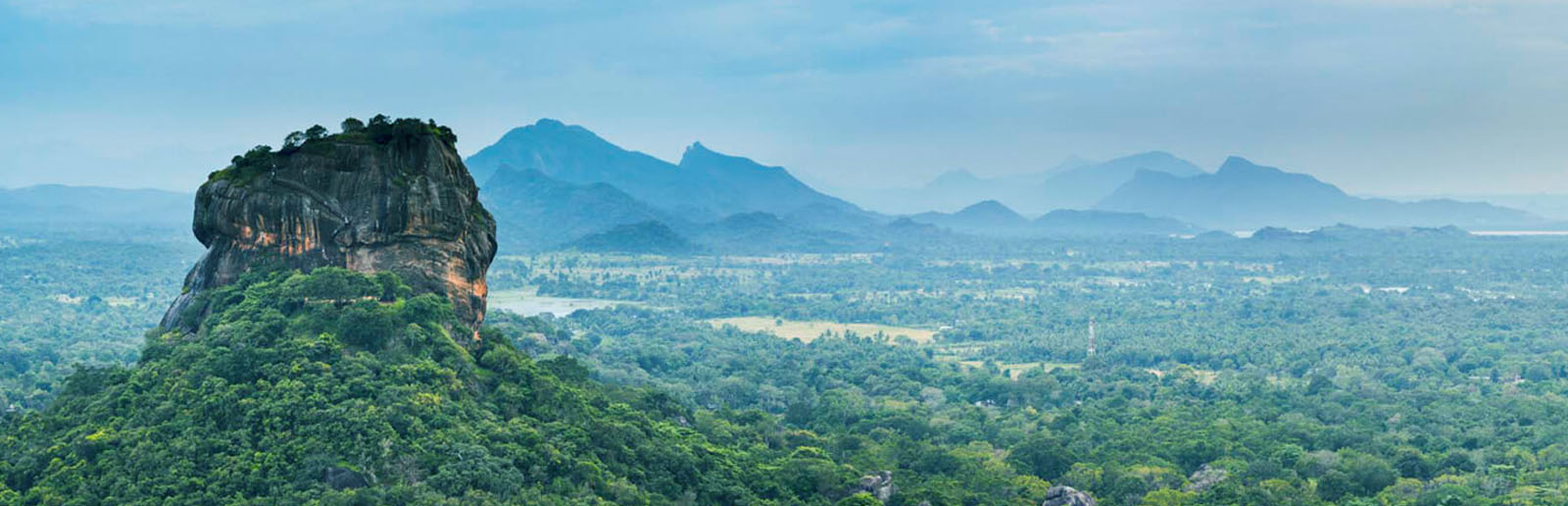
Sri Lanka : Wonder of Asia
Sri Lanka, an island which is situated southeast of India, is a land of myth, legend, history and one of the richest cultures. It is characterized by legends and stories from the Indian epic the Ramayana filling the air and with ruins and heritage sites to support them, its colonial architecture, Buddhist temples, stunning beaches, herds and herds of slow-moving elephants, and destinations like Colombo, Galle, Kandy & Yala National Park etc.
With stunning beaches, wildlife reserves, historical temples & beautiful landscape, Sri Lanka draws in a huge number of travelers to its shores every year.
Plan My Srilanka Holiday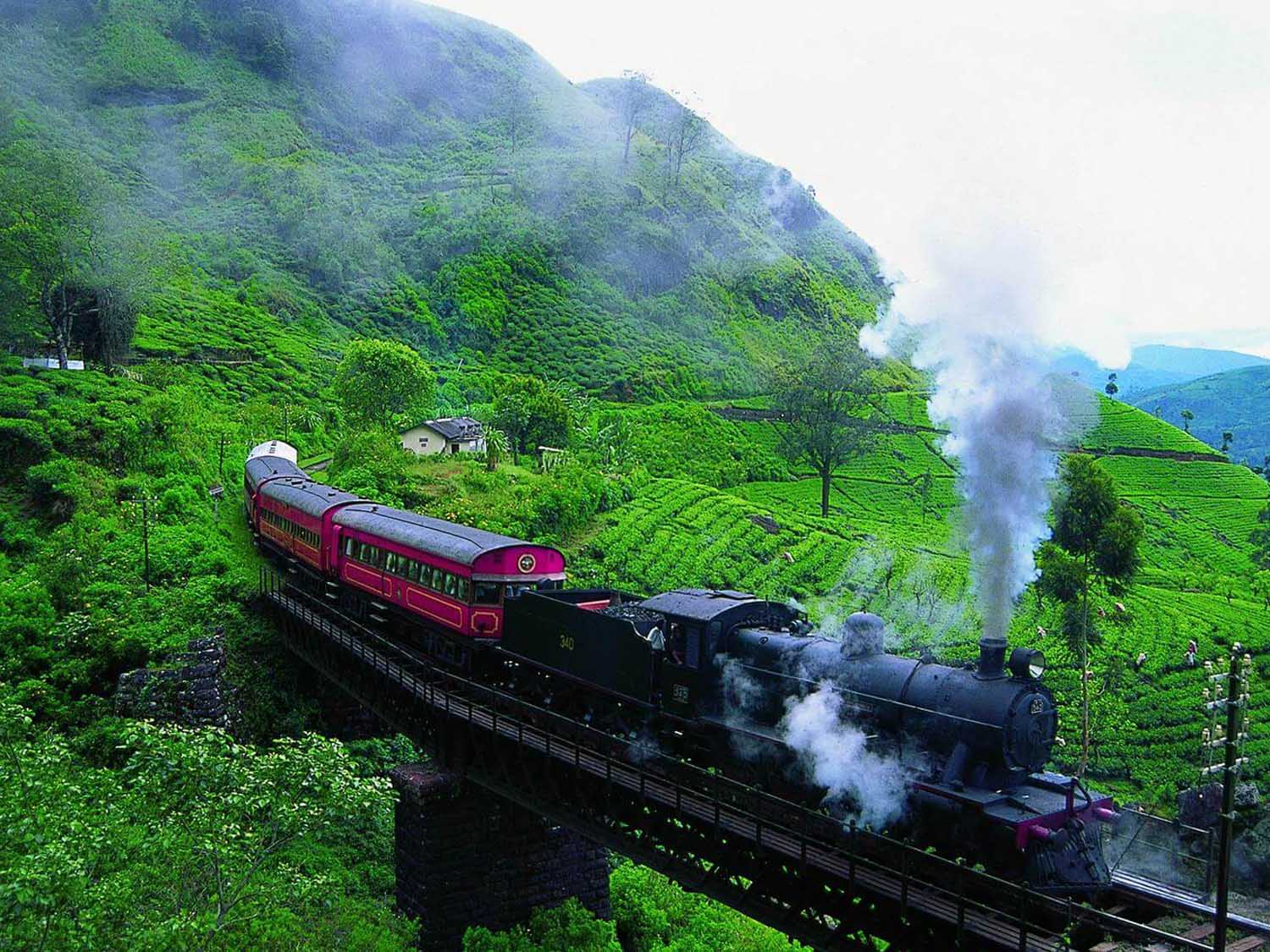

Colombo International Airport (CMB) is the main point of entry for international travelers in Sri Lanka providing direct flights from Europe, Asia, Australia and the Middle East. The availability of domestic flights in Sri Lanka is limited as most of the cities are quite near to each other. Sri Lankan Airlines is the national carrier of the country.
Direct flights from Indian cities like Delhi, Mumbai, Bangalore, and Chennai are available by Air India, Jet Airways, and SriLankan Airlines. India to Sri Lanka flight duration may vary from 90 minutes to 3 hours 30 minutes depending on the airport. Transfers to resorts would be arranged prior to your arrival by us.
The shape of Sri Lanka resembles a jewel, located at 5o 10oN and 79o 82oE. It is an island-country that is surrounded by the mighty Indian Ocean. India is separated from Sri Lanka by Palk Strait and the Gulf of Mannar. The Hindu mythology reveals of a bridge that existed up to the early 15th century that connected India and Sri Lanka by land that was actually passable on foot.
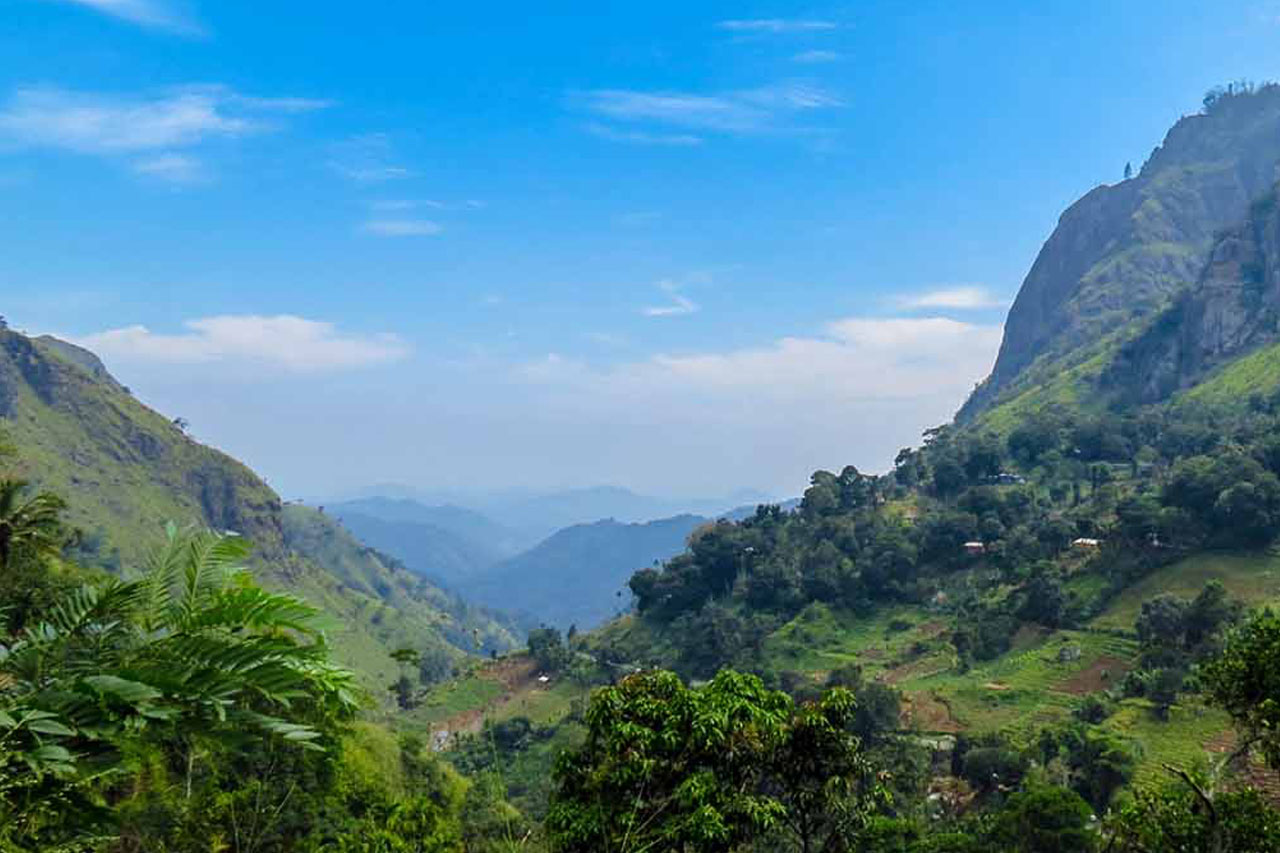
The topography of Sri Lanka is mostly flat, with mountains rising only in the southern region of the country. The country enjoys a coastline of over 1,500 kilometers, 40 lagoons, mangrove covers for more than 7,000 hectares and is home to diverse flora & fauna.

Since Sri Lanka is a tropical country, you can expect the rain anytime of the year in different parts of the country. However, the two major rainy seasons are South-West monsoon (May to July) which predominantly affects the west & south coast of Sri Lanka and North-East monsoon (October to January) predominantly affecting the east coast.
The climate of Sri Lanka changes dramatically from central highlands to the coastal belt. For example at Nuwara Eliya, in the hills of Central Sri Lanka, has a temperature around 15-20°C throughout the year, whereas Hambanthota, located in the dry zone, has a temperature consistently around 30-35°.
The culture of Sri Lanka mixes modern elements with traditional aspects and is known for its regional diversity. Sri Lankan culture has long been influenced by the heritage of Theravada Buddhism passed on from India, and the religion's legacy is particularly strong in Sri Lanka's southern and central regions.
The history of the country can be traced back to over 500,000 years and finds mentioning during Mesolithic, Paleolithic and Iron ages. Besides, Sri Lanka also plays a crucial role in the Ramayana, The country which is similar in size to Ireland is diverse in terms of its ethnicity and linguistics. The current population of Sri Lanka is more than 20 million and ranks 58 amongst the world’s most populated countries.


Sri Lanka is a Lower Middle-Income country with a GDP per capita of USD 4,073 (2017) and a total population of 21.4 million people. Following 30 years of civil war that ended in 2009, Sri Lanka’s economy grew at an average 5.8 percent during the period of 2010-2017, reflecting a peace dividend and a determined policy thrust towards reconstruction and growth; although there were some signs of a slowdown in the last few years.
The economy is transitioning from a predominantly rural-based economy towards a more urbanized economy oriented around manufacturing and services. The country has made significant progress in its socio-economic and human development indicators.
Sri Lanka has a lot of diverse flora & fauna. The country has over 90 species of mammal (including elephant, leopard, bear and monkeys), hundreds of butterflies, over 80 snake species (including deadly cobras and vipers), and about 435 species of birds.
Sri Lanka has the distinction of having the world’s oldest recorded wildlife preserve. More than 2000 years ago, in the 3rd century BC, a region in north central Sri Lanka was set aside by royal decree to be free of all hunting. Today, more than 8% of the land is preserved as national park or nature preserve.


I’d like to send you a sincere "thank you" for all of your assistance during my recent trip to Colorado. It was invaluable to me and I realize and appreciate it greatly. Your professionalism and efficiency were comforting and reassuring in any weather and environment. Moreover, none of the additional services I ordered at this traveling agency has been a failure yet. Everyone in the team of SunTravel knows how to do their work, and I think that’s why they are still among the leaders of traveling business. Every suggestion your staff made was excellent, as you considered my travel budget, time constraints, and personal likes and dislikes. I would definitely work with your agency again, especially with Kent, as he made my trip easy and stress-free. It was a real delight to work with you.